
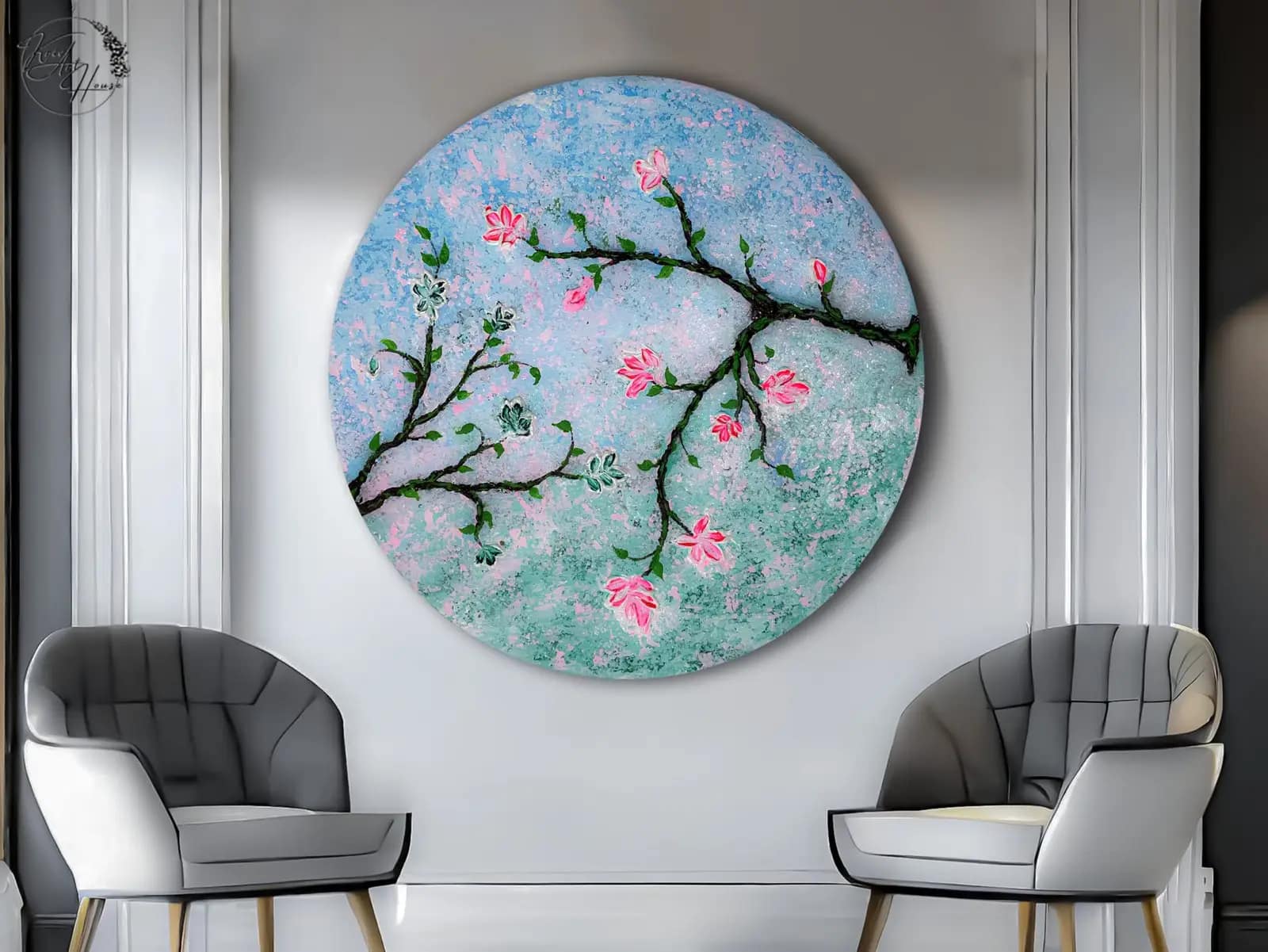
Circular artwork offers a different way to decorate walls that are dominated by straight lines and rectangular shapes. Its curved outline can soften the appearance of a room while drawing attention to a specific area. The size, colour, and position of the canvas determine how well it fits with the furniture and surrounding decor. A circle that is too small may disappear against a wide wall, while an oversized piece can compete with nearby fixtures. Choosing suitable Circle Wall Decor starts with measuring the available space and understanding how the artwork will relate to the rest of the room.
Why Circular Artwork Works in Modern Interiors
Many interiors contain rectangular sofas, square tables, straight shelves, and angular cabinets. Circular paintings introduce a contrasting shape that can make these arrangements feel less rigid. Their curved edges direct attention toward the artwork without creating the strong horizontal or vertical lines associated with rectangular canvases. This makes circular designs suitable for living rooms, bedrooms, hallways, and other spaces where a softer visual element is needed. The effect depends on the painting’s size, composition, and relationship with the surrounding furniture.
A circular canvas does not need to match every decorative item in the room. Instead, consider how its colours, textures, and overall shape relate to the existing interior. A simple circular painting may suit a room with detailed furniture, while a colourful design can provide contrast against neutral walls. Textured artwork introduces another layer of interest through raised paint and changes in surface depth. Choosing a canvas that complements the room’s character helps the circular shape feel intentional rather than decorative without purpose.
Before selecting a design, consider these features:
- Canvas diameter: Determines how much wall space the painting occupies.
- Colour palette: Connects the artwork with furniture, fabrics, and other finishes.
- Surface texture: Adds depth and changes how the painting appears under different lighting.
- Composition: Influences whether the artwork feels subtle, balanced, or visually dominant.
- Viewing distance: Affects how clearly the shapes, colours, and finer details can be seen.
These factors work together rather than independently. A large circular painting with a restrained colour palette can have a strong presence without making the room feel busy. A smaller design with bold colours may attract more attention than its dimensions suggest. Consider the complete artwork rather than judging it by diameter alone. This helps you select a piece that suits the wall and the room’s visual balance.
How to Choose the Right Circle Canvas Size
Start by measuring the wall where you plan to display the painting. Check the available width and height, then identify any windows, door frames, switches, shelves, or wall lights that may affect placement. If the painting will hang above furniture, measure that piece as well. The canvas should relate to the furniture width without appearing squeezed between nearby objects. Leave enough open wall around the circle so its outline remains easy to distinguish.
The diameter of circular artwork is particularly important because the shape occupies space differently from a rectangular canvas. A circle does not extend into the corners of its surrounding area, which can make it appear smaller than a rectangular painting with a similar width. For this reason, look at the full wall arrangement rather than comparing measurements alone. Consider the circle’s position in relation to the furniture and the amount of open space around it. A suitable size creates a clear focal point without overwhelming the room.
Use these general guidelines when comparing sizes:
- Small circles: Suitable for narrow walls, compact spaces, or carefully planned group arrangements.
- Medium circles: Work well on smaller feature walls and above modest furniture pieces.
- Large circles: Can anchor a living room wall or provide a focal point above a substantial sofa.
- Oversized circles: Need sufficient wall clearance and a viewing distance that allows the complete design to be appreciated.
- Multiple circular paintings: Require careful spacing so each canvas remains visible as part of the overall arrangement.
These categories are descriptive rather than fixed size ranges. The right diameter depends on the room’s proportions, ceiling height, and furniture placement. If the wall is wide, a medium circle may look isolated unless other elements connect it to the space. If the wall is narrow, a large circle may leave too little room around its edges. Measure before ordering and check the product’s full dimensions, including any frame or mounting hardware.
Position Circle Wall Art Above Furniture
Circular paintings can work above sofas, console tables, beds, and sideboards. The important consideration is the relationship between the canvas and the furniture below it. A circle that sits too high may appear disconnected, while one placed too low can feel cramped against the furniture. As a general starting point, leave around 6 to 10 inches between the bottom of the canvas and the furniture surface. Adjust this gap according to the artwork’s diameter, the furniture height, and the available wall space.
The centre of wall artwork is often positioned around 57 to 60 inches above the floor. This is a useful reference point, not a strict rule for every room. When the painting hangs above furniture, its position should work with the furniture rather than follow the measurement automatically. Check the placement from the main seating position as well as from the entrance to the room. This helps you judge whether the circular canvas feels connected to its surroundings.
Circular artwork also works on walls without furniture beneath it. In these spaces, use nearby architectural features to establish a suitable position. A painting can be centred within a wall section or placed to balance a doorway, cabinet, or other fixed feature. Avoid positioning it so close to a corner that the curved outline loses its visual impact. Leave enough room around the canvas to make its shape clear.
Arrange Circular Paintings with Other Artwork
A single circular canvas creates a simple focal point, but a group arrangement can add more movement to a wall. The challenge is keeping the paintings connected without making the display look crowded. Consider the combined width and height of the arrangement before deciding where each canvas should go. The spacing between pieces should be deliberate, and the overall group should relate to the furniture beneath it. Test the arrangement with paper templates before drilling holes.
Circular paintings can be combined with rectangular canvases to create contrast. The curved shape breaks up the straight edges of traditional frames, while rectangular artwork provides structure. Use a shared colour palette or related subject matter to connect the different shapes. If the paintings vary greatly in colour, size, and texture, the arrangement may feel disjointed. A clear visual relationship helps each piece contribute to the overall display.
Set of Two Wall Art can also provide a coordinated display when the two pieces share related colours or design elements. Although paired paintings are often rectangular, their composition can complement a circular canvas displayed nearby. Measure the total width of the pair and account for the gap between them before arranging the wall. Keep the visual weight balanced so the circle does not appear disconnected from the set. A little open space between different arrangements helps each group remain distinct.
Coordinate Colours and Textures
The colours in a circular painting influence how noticeable it becomes. Neutral shades can blend naturally with understated interiors, while stronger colours may create contrast against pale walls. Choose artwork that relates to one or two colours already present in the room if you want a coordinated appearance. Exact colour matching is unnecessary because contrast can give the artwork greater definition. Consider the wall colour, flooring, furniture finishes, and nearby fabrics before making a selection.
For rooms that need a stronger accent, Colorful Canvas Wall Art can introduce bright colours and expressive shapes. A circular format can help these colours feel contained within a clear outline. If the painting has several strong shades, keep nearby decorative objects relatively simple. This allows the artwork to remain the main point of interest. In rooms with colourful furnishings, look for a canvas that repeats a shade already present rather than adding several unrelated colours.
Texture also affects how circular artwork interacts with the room. Raised acrylic paint creates shadows and highlights that change as the lighting shifts. Smooth surfaces tend to produce a more uniform appearance, while heavily textured pieces can attract attention even with a restrained palette. Balance textured artwork with simpler wall finishes and furnishings. If the painting already has substantial visual detail, avoid surrounding it with too many competing patterns.
Nature-inspired artwork can introduce another visual element without losing the softness of a circular shape. A tree canvas painting can connect the artwork with natural materials, greenery, and earthy colours in the room. Consider how the branches, trunk, and surrounding colours fit within the circular composition. The painting’s subject should remain clear at the intended viewing distance. Choose a size that allows its main details to be appreciated without crowding the wall.
Light and Maintain Your Circular Canvas
Lighting helps reveal the painting’s colour, texture, and surface detail. Natural light can change how artwork looks throughout the day, so observe the wall before choosing a permanent position. Strong direct sunlight may contribute to fading or deterioration over time. If the wall receives intense sunlight, consider window coverings or another position with less exposure. Keep the canvas away from damp areas and sudden environmental changes as well.
Artificial lighting can help illuminate circular artwork after dark. Suitable LED fixtures, picture lights, or adjustable spotlights can provide useful illumination when positioned correctly. Check for glare, uneven brightness, and shadows that distract from the painting. Textured acrylic surfaces may produce small shadows under directional lighting, so test the effect from the main seating area. Follow the lighting manufacturer’s recommendations for distance and heat clearance.
Basic care also helps preserve the canvas and painted surface:
- Dust gently with a clean, soft, dry brush or another method recommended by the artist.
- Avoid household cleaners, solvents, and unapproved liquids on the painted surface.
- Handle the canvas by its frame or edges rather than pressing against the artwork.
- Use secure hanging hardware suitable for the wall type and the painting’s weight.
- Keep the artwork away from excessive moisture, direct sunlight, and heat sources.
If the painting becomes stained, cracked, or damaged, seek advice from a qualified art conservator rather than attempting an improvised repair. Textured surfaces may be especially difficult to clean because dust can settle between raised areas. Follow any care instructions supplied with the artwork. These precautions help keep the painting in good condition while it remains on display.
Conclusion
Circular artwork can soften angular interiors and provide a clear focal point when its size and placement suit the room. Measure the wall and furniture, leave enough space around the canvas, and consider how colours and textures relate to the existing decor. If you combine circular paintings with other artwork, plan the complete arrangement before hanging anything. Thoughtful placement and regular care help the canvas remain an attractive part of the living space.
Frequently Asked Questions
1. How do I choose the right size for circle wall decor?
Measure the available wall space and the furniture beneath the painting. Choose a diameter that creates a clear focal point while leaving enough open space around the circular outline.
2. Where should I hang a circular canvas in a living room?
A circular canvas can be placed above a sofa, console table, sideboard, or on an open feature wall. Position it in relation to the furniture and surrounding architectural features.
3. Can circular paintings be combined with rectangular artwork?
Yes. Circular and rectangular paintings can create an interesting contrast when they share related colours, textures, or subject matter. Plan the complete arrangement and keep the spacing consistent.
4. What colours work well with circular wall art?
Neutral colours suit understated interiors, while brighter colours can create a focal point against plain walls. Choose a palette that relates to the room’s furniture, fabrics, and existing finishes.
5. How should I care for a circular acrylic canvas painting?
Dust it gently using a clean, soft, dry brush or a method recommended by the artist. Avoid unapproved cleaning products, excessive moisture, direct sunlight, and pressure on the painted surface.